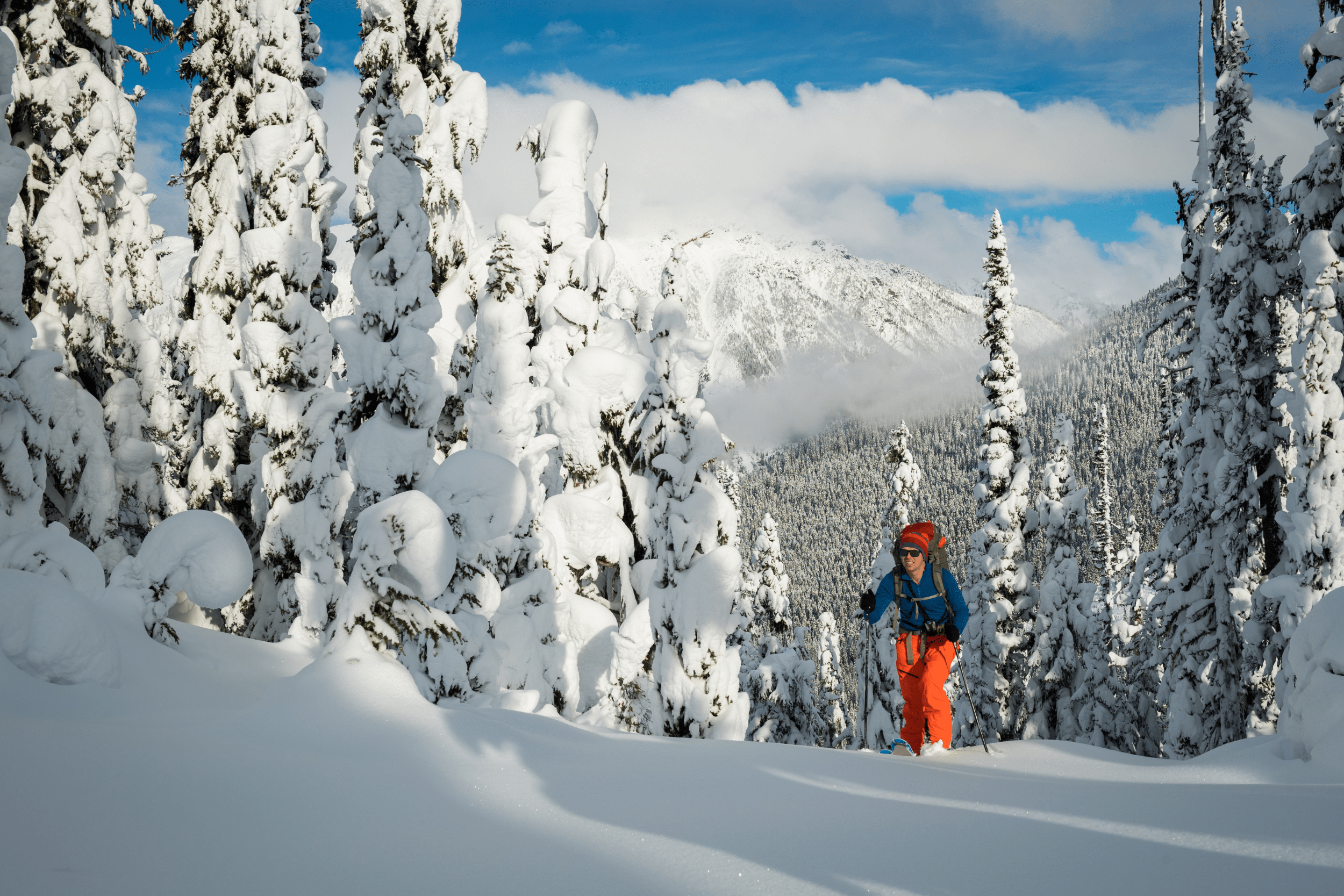
Also known as uphill skiing or skinning, ski touring is a discipline that involves both an uphill stint and an electrifying descent. This is done by using specialised climbing skins that attach to the base of the ski to allow you to climb uphill without sliding backwards, thus demanding both cardiovascular fitness and proficient piste and off-piste skiing. Once tourers have reached the summit of their journey, the skins are removed, and the descent can begin.
The name skinning originates from early methods used by pioneers of the sport who attached animal skin to the bottom of their skis with the hair facing the rear to provide better grip and stop the skis sliding backwards. Nowadays, synthetic skins are stretched across touring skis; these skis are much wider yet lighter than alpine skis to allow them to float over powder better on the descent.
Providing weightlessness and smoothness that only soft, untouched powder can offer, ski touring is a perilous sport amongst daredevils and thrill-seekers that saw an increased uptake during the Covid pandemic when many European countries closed their ski facilities*. Among its adrenaline boosting benefits, one of the biggest appeals of ski touring is that is takes place in the backcountry. Not limited by lift access, tourers can reach epic, untracked powder fields that other skiers can’t.
Whilst it requires careful preparation and planning as well as a refined skill set, the hardest aspect of touring is said to be the actual downhill ski. People partaking in touring need to be confident carving down red and black runs and ought to have experience skiing off-piste as the deep loose powder requires a slightly different technique to avoid catching an edge, which usually results in a fall or biff.
Be aware
The exhilarating sensation of speed and freedom as you drift across untouched powder excites a torrent of adrenaline arguably unmatched by other types of skiing but, of course, this comes with additional risks.
Mountains claim the lives of numerous experienced mountaineers every year, not always as a result of negligence, which is why it is critical that the risks associated with this activity are assessed and managed responsibly for the safety of all those involved. This is where going with a guide is both safer and, often, more enjoyable when touring and a must for those skiing alone and novice tourers.
Not only do guides know the terrain and local snow conditions, they can also share their knowledge of the backcountry explaining the history and process of glacial formations such as crevasses, seracs and debris landforms. Another reason to go with a guide is that it can be a necessity when it comes to your travel insurance; some policies will only provide cover for activities such as touring if you are accompanied by a fully locally licensed guide and have followed their instruction.
Be honest
Firstly, and perhaps the most importantly, be honest with yourself and guides regarding your abilities and experience; the last thing you want or need is to be stranded in deep powder in inaccessible areas, posing a threat to both you and those required to rescue you. Touring is more enjoyable for competent and comfortable off-piste skiers that are solid on skis and can cope with anything from fluffy powder to ice, crud and breakable crust.
This doesn’t only apply to your actual skiing ability but also general fitness; this sport will really test your aerobic ability and even just being tired or potentially absentminded could put you in considerable amounts of danger. Some ascents can take a few hours, good endurance not only makes this more bearable but allows you to absorb the breathtaking scenery.
Be prepared for the worst
Venturing into the backcountry away from patrolled areas requires you to be aware of risks that are omitted on groomed slopes. Avalanches, crevasses and hypothermia are just a few of the potentially fatal risks you need to prepare for when going off the beaten track. There are several things you must take to increase your chance of survival in these remote places:
- Avalanche airbag pack – once inflated, this increases your surface area to help you stay at the top of the avalanche debris and stop you getting buried. By keeping you near the surface, it can also protect the head and neck from trauma and impact on the way down.
- Transceiver – locating buried skiers visually is almost impossible in an avalanche. A transceiver or avalanche beacon will help you be found or find someone buried in the debris. As will most safety equipment, ensure you have regularly practiced using the beacon to keep your skills sharp.
- Probe – once you have identified a person’s location under the snow using a transceiver, you will need use your probe to confirm the position and depth they lay at. Again, some designs are quite intuitive so make sure you have practiced deploying and assembling it.
- Shovel – primarily for digging people out of an avalanche, shovels can also be an invaluable tool for creating tent sites and walls to shelter, both on breaks and whilst waiting for help in an emergency. Specialised shovels are essential for this activity as they are both tough enough to cut though hardened snow and collapsible to easily fit in your backpack.
- Map, App or GPS – a huge part of the preparation for ski touring is route planning, understanding the capricious backcountry environments and analysing terrain. A topographical map is essential to show large-scale detail and quantitative representation of relief features; GPS systems and apps can also show elevation changes and climate data as well as give a more accurate location in the case of an emergency. Purpose built GPS devices are regarded as more reliable, as mobile phones are more easily affected by cold temperatures and sparse signals.
- First aid – like in any winter activity, it is wise to take these kits touring especially when in the backcountry as medical care or rescue could be hours away. A first aid kit with basic supplies including pain killers and foil blankets can help prevent minor injuries from becoming something more serious.
- Ski repair kits – in touring this will likely include skins, bindings and tools to fit these such as screwdriver kits. Small items like duct tape and cord can buy time for many gear malfunctions allowing you to get down the mountain or to a convenient place where things can be repaired.
- Headtorch – winter days are short, and touring can be unpredictable. If you take longer to descend than anticipated, you may need a headtorch to assist you down the mountain.
- Fuels – in the cold, you naturally need more energy than usual to keep you warm and touring is a much more intense exercise than alpine skiing so high energy foods to fuel the body are essential. A hot thermos of soup can be great to provide warmth and energy. Similarly, ensure you have plenty of fluids and advisably have them in a specially designed winter water bladder that is close to your body to avoid them freezing up.
- Walkie talkie – in remote areas you may find that you won’t have cellular service so it is critical that you have planned a communication strategy, and that someone on the ground knows your route and plan in the case of an emergency. Two-way radios are great to help you communicate between one another as weather conditions can make it difficult to maintain visual or verbal contact within just a few turns.
These above tips are simply the essentials, there are other items specially designed for this activity, such as backcountry ski clothing and equipment, that will ensure you safely enjoy your time touring. It goes without saying but if you are looking to go touring, make sure you seek professional advice on how to stay safe and make the most of your time out there. Seasoned skiers will also be familiar with several less obvious items that you may require, such as sunscreen, lip salve and disposable hand warmers.
Can we help with your travel insurance?
Winter is a very exciting time for avid skiers but it can also be very dangerous. If you plan on trying something a bit different this season, touring is an electrifying escape that takes you away from the bustle of resorts and busy slopes so we want to ensure you can enjoy to the full; following advice from experienced professionals and ensuring you have travel insurance that not only covers winter sports but explicitly states its cover of ski touring is fundamental to give you the peace of mind to totally enjoy your travels
Soak Insure have teamed up with travel insurance specialists, Jackson Lee Underwriting, to bring you a range of travel insurance policies. These policies cater for the basic family ski holiday as well as offering several category extensions to include activities such as touring.
Our team of experts can advise you on the cover you require to ensure you are adequately protected this season. To get a travel insurance quote, click here.
Sources: