Skiing is not just a winter sport; it’s a multifaceted activity with various styles, each catering to different preferences and skill levels. Here, we look at the different levels and types of skiing and how these can impact your insurance needs. From the exhilarating rush of downhill skiing to the precision of freestyle, here are the different levels and types of skiing and where we think is best to practice them.
Skiing is a versatile and thrilling activity that offers something for everyone, from the serene beauty of cross-country trails to the heart-pounding excitement of freestyle and backcountry adventures. The diverse types of skiing and the myriad of destinations around the world ensure that skiers of all preferences and skill levels can find their perfect snowy haven. Whether you’re a beginner seeking the joy of the first descent or an expert chasing the adrenaline rush of untouched powder, the world of skiing beckons.
How Many Levels of Skiing Are There?
Skiing proficiency is typically categorised into various skill levels to ensure safety and an enjoyable experience for all. These skill levels are not rigid categories; rather, they represent a continuum, and individuals progress at their own pace. Ski resorts often have designated runs and areas for each skill level, allowing skiers to choose terrain that matches their proficiency. Here are the most commonly recognised levels of skiing:
Beginner:
Beginner and novice skiers have little or no experience; they may be able to snow plough and link turns but it is slow and there are usually still issues with balance and stopping to overcome. Beginner lessons start with the core fundamentals of skiing, like how to attach to your skis or board and basic manoeuvres, stopping, and controlling speed on gentle slopes.
Intermediate:
Skiers who can confidently navigate easy and some intermediate blue slopes and are looking to develop parallel turns and speed up. In the latter stages of intermediate skiing, you may begin journeying off the piste a little, mainly at the sides of slopes. This requires more balance and flexibility in the legs for a less groomed terrain.
Advanced:
Advanced skiers are comfortable on all types of slopes and tackling challenging terrain at speed. This skill can carve and will be looking to master advanced techniques and practice different body positions, such as the pole plant, skiing stacked and ankle flexion, which enhance different characteristics of skiing, including the speed of turns.
Expert:
Experts are highly skilled skiers with the ability to handle even the most challenging runs and are usually looking to make marginal adjustments to an already strong technique. Like advanced skiers, experts will be looking to master advanced techniques, tackling steep and ungroomed terrain with confidence. Experts may also dabble with ski jumping, snow parks and other freestyle activities.
So those are the different levels of skiing, but what about the different types?
Downhill Skiing:
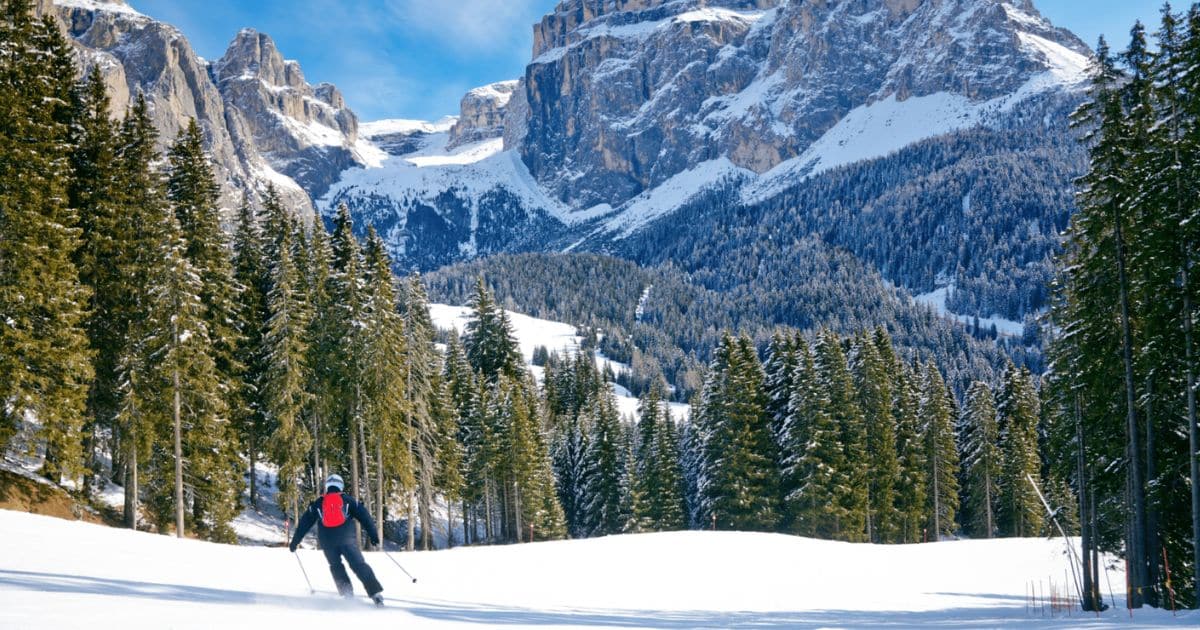
The most common form of skiing, also referred to as Alpine skiing, is where skiers descend slopes or hills, relying on gravity; this discipline is suitable for all levels of skiing and requires a chairlift or other mechanical means of reaching the top of the slope of your choice and then skiing downhill.
Downhill skiing is accessible in many places across the world, including Italy, Austria, Canada, and Japan. Other aspects of a ski holiday will be considered when deciding where to practice downhill skiing. Read about some of our favourite European ski destinations.
Cross-Country Skiing:
Typically done on rolling landscapes, this type of skiing is often much flatter without the use of ski lifts or other assistance. A different type of ski is used, which is much lighter, and the bindings are more flexible to allow for a gliding motion. Any skill level can practice cross-country skiing allowing anyone to enjoy exploring the scenic landscapes on offer. Scandinavian countries like Norway and Sweden offer extensive cross-country ski trails.
Freestyle Skiing:
Freestyle skiing is more of an acrobatic form of skiing and involves performing tricks, jumps, and flips on a variety of terrain, including moguls and snow parks. As part of the Winter Olympics, freestyle skiing can be a competitive sport in which athletes compete for speed over moguls and aerial stunts.
This is most suited to intermediate and expert skiers with a flair for creativity. Resorts like Whistler Blackcomb (Canada), Laax (Switzerland), and Breckenridge (USA) have epic terrain parks to offer.
Freeride Skiing:
Like freestyle, freeride skiing emphasises skiing in natural, ungroomed, challenging terrains, often off-piste. This type of skiing is best suited for intermediate and expert skiers seeking an adrenaline rush in backcountry environments. Skiers can freeride anywhere that offers backcountry areas, such as Chamonix (France), La Grave (France), and Revelstoke (Canada).
Telemark Skiing:
A combination of cross-country and downhill skiing, telemark skiing involves going down the mountain and is characterised by a distinct ski binding in which the heel is not attached. This allows skiers to lunge into carving turns and allows for more flexibility. Telemark skiing requires slightly more balance and skill than downhill skiing so it is more suitable for intermediate to expert skiers looking for a more challenging and elegant form of skiing. Telemark skiing is embraced in places like Norway, where the telemark turn originated, and in the Alps.
Backcountry Skiing:
Backcountry skiing involves skiing in unmarked or unpatrolled areas outside of ski resorts, often requiring hiking or skinning uphill. This type of skiing is best suited to adventure enthusiasts seeking untouched powder and a more immersive experience. Due to the risk associated with backcountry skiing, it is advised to have a strong skill set and adventure safely with a guide. There are a few types of backcountry skiing including ski touring; read our introduction to ski touring, here.
It is important to ensure you seek professional and expert guidance before attempting any new type of skiing; here, we provide a general guide that should not be taken as expert guidance to skiing proficiency.
Can we help with your travel insurance?
Winter is an exhilarating time for avid skiers but it comes with risk. Soak Insure has teamed up with travel insurance specialists, Jackson Lee Underwriting, to bring you a range of travel insurance policies to give you peace of mind on the slopes.
When sourcing travel insurance, there are a few things to consider. Principally, what activity you will be doing. Basic policies cover activities like dog sledging, cross country/Nordic walking, skiing and snowboarding off-piste and on-piste but exclude things like terrain parks and telemark skiing. It’s important to be clear exactly what you need cover for on arranging your policy.
The other activities mentioned in this article can be covered in more advanced policies, which can also include training and competition extensions which some experts may require, especially if you are looking to practice more risk-averse activities. It is important to remember that not all activities are going to be covered so you should always check if in any doubt and make sure you are aware of exactly what activities, and eventualities, you are and are not covered for before you embark on your travels.
Whilst the above is important, there are other areas to be aware of, such as that some policies restrict the number of ski days allowed, some may differ regarding transportation from the mountain in the event of an accident – most policies don’t cover ‘search and rescue’ but as a minimum, it should cover evacuation (including by helicopter) if deemed medically necessary. These are just some of the things you should consider when it comes to arranging your travel insurance but speaking to an insurance professional will help with the nuances and ensure you are clear about your travel insurance protection.
Once you are away, policyholders are, understandably, expected to follow local guidelines and to practice suitable routes – to stay safe and manage risk – as well as meet any other conditions of the policy; we also strongly recommend that all skiers wear the necessary safety equipment, even if there is no local legal requirement.
Our team of experts can advise you on the cover you require to ensure you are adequately protected this season; you can contact them at 01653 609107. Alternatively, to get a travel insurance quote.